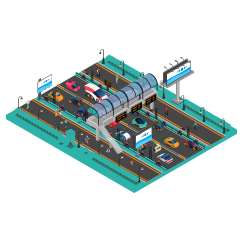
Best Practices for Toll Transaction Validation

Toll transaction validation is a critical step in ensuring accurate revenue collection, operational efficiency, and customer satisfaction in modern tolling systems. With the increasing complexity of electronic toll collection (ETC) environments, including Open Road Tolling (ORT), Automatic Number Plate Recognition (ANPR), and multi-agency interoperability, validating every .transaction has become more challenging—and more essential—than ever.

img

A well-defined toll transaction validation strategy helps agencies detect errors early, prevent revenue leakage, and maintain public trust.

Understanding Toll Transaction Validation

A toll transaction begins the moment a vehicle passes a toll point, whether via RFID transponder or ANPR camera. From detection to account posting, each transaction passes through multiple components:

img

Roadside
Equipment 

sensors, cameras, RFID readers

img

Transaction Processing
Engines 

calculate toll based on vehicle classification

img

Back-Office
Systems

account management, payment processing, and reconciliation

img

Violation Enforcement
Systems 

handle unpaid or misposted transactions

Validation ensures that each step—from detection to billing—is accurate, complete, and auditable.

Key Best Practices

1 Implement Multi-Layer Validation

Relying on a single validation method is insufficient. Agencies should adopt a multi-layer approach:

img
img

Hardware-level validation

Confirm sensors, cameras, and readers accurately detect vehicles.

img

Back-office validation

Verify account updates, billing, payment processing, and violation handling.

img

Software-level validation

Ensure correct transaction creation and posting by transaction engines.

img

Hardware-level validation

Confirm sensors, cameras, and readers accurately detect vehicles.

This layered approach reduces the risk of undetected errors and ensures system integrity.

2 Use Automated and Manual Testing

Automation is critical for handling high transaction volumes efficiently, but manual testing remains important for edge cases and real-world scenarios.

img
img

Automated testing

Simulates high-volume traffic, validates standard transaction flows, and performs regression testing after software updates.

img

Manual testing

Focuses on complex scenarios, such as partial ANPR reads, vehicle misclassification, or unusual traffic patterns.

Combining both approaches provides comprehensive coverage.

3 Validate Vehicle Classification and Toll Rates

Automation is critical for handling high transaction volumes efficiently, but manual testing remains important for edge cases and real-world scenarios.

img

Best practices include:

img

Testing classification accuracy for all vehicle types and lanes

img

Validating rate tables and dynamic pricing configurations

img

Monitoring for anomalies in posted transactions

4 Reconcile Transactions Regularly

Regular reconciliation between roadside data, back-office systems, and financial records is essential. Best practices include:

img

Best practices include:

img

Daily or batch reconciliation for high-volume toll points

img

Exception reporting for mismatched transactions

img

Auditing incomplete or failed transactions to identify root causes

Reconciliation ensures accurate revenue accounting and highlights systemic issues before they escalate.

5 Monitor and Report Anomalies

Real-time monitoring and analytics can detect unusual patterns or anomalies, such as:

img

Best practices include:

img

Sudden drops in transaction volume

img

Spike in unpaid or disputed transactions

img

Equipment malfunctions affecting multiple lanes

Timely reporting allows agencies to respond quickly and prevent revenue leakage.

6 Ensure Compliance and Auditability

All toll transactions must comply with regulatory and financial standards, including data privacy and payment security requirements.

img

Best practices include:

img

Maintaining detailed transaction logs

img

Encrypting sensitive data

img

Conducting periodic audits for accuracy and compliance

A robust audit trail supports transparency, accountability, and dispute resolution.

7 Test System Updates and Integrations

Tolling systems frequently undergo software updates, hardware upgrades, or integrations with other agencies.

img

Validation should include:

img

Regression testing after system updates

img

Integration testing across multi-agency interoperability networks

img

Simulation of peak traffic conditions to confirm performance

Proactive testing ensures continued accuracy and reliability after system changes.

Conclusion

Accurate toll transaction validation is the backbone of a reliable, efficient tolling operation. By implementing multi-layer validation, combining automated and manual testing, monitoring for anomalies, reconciling transactions regularly, and maintaining compliance, toll agencies can protect revenue, reduce operational risks, and deliver a seamless experience to motorists.

In an era where tolling systems are becoming faster, more automated, and interconnected, adopting best practices for transaction validation is no longer optional—it’s essential.